Standing in the Arena: The Feast of the Glorification

Photo by Miguel u00c1. Padriu00f1u00e1n on Pexels.com

Just over 100 years ago, Theodore Roosevelt made a speech at the Sorbonne in Paris entitled ‘Citizenship in a Republic’.  It was a speech about civic participation in society.  Part of this speech became well known, a rally cry if you like, to stand up and be counted, to do your bit.  It is not the critic who counts: he said, not the man who points out how a strong man stumbles or where the doer of deeds could have done better. 

The credit belongs to the man who is actually in the arena, whose face is marred by dust and sweat and blood, credit belongs to the man, who knows the great enthusiasms, the great devotions, who spends himself for a worthy cause; who, at the best, knows in the end, the triumph of high achievement, and who, at the worst, if he fails, at least he fails while daring greatly,’  Oh that the speeches of American Presidents today, could be so inspiring.

These stirring words suggests that glory is not about success, or power, or celebrity. It is not the case that the more we do, the more we earn, the better behaved we are, the shinier and more glorious we will be. True glory involves sacrifice and participation, a humility combined with courage, a hope and yearning for a better future for everyone, of entering fully into the life of human community, doing your bit, standing in the arena in the grit and the dust, by daring greatly.

The word ‘glory’, Michael Ramsey, once Archbishop of Canterbury said, is often on the lips of Christian people, but they have only a vague idea as to its meaning. The events of the Transfiguration, or the feast of the ‘Glorification’ as it is sometimes called, help us understand the word glory a little more, – a word which, Ramsey says, expresses in a remarkable way the unity of Creation and the Incarnation, the Cross, the Spirit, the Church and the world to come.  

God, we believe, stepped into the arena of our humanity, he walked about among us.  God reached out to us in such a daring way, that it almost seemed like foolishness. When the word leapt down from heaven, we came to know that the whole of creation is charged with God’s glory and there is fire and music under our feet. Right here, right now. Every atom, every cell, every speck of dust, every bit of you and me, is infused and transfigured by God. God does not stand and watch from a distance- God is in the midst of us. God in Christ entered into human existence, deigning to be clothed in flesh- that he might bring us to glory too- 

“The glory of God is humanity fully alive.” the second-century theologian Irenaeus said.  So we might ponder how we live out the glory of God? How does God’s glory shine in our hearts and our lives, as a lamp shining in a dark place? Are we fully alive to the wonders that God may be performing in us and through us? 

For many in the world today, there is a sense of pervading despair and injustice. Can we as Christian’s witness to something better- something brighter and something more glorious for them? We are not immune to the pain and sorrow or challenges of life, but if we have died with Christ in our baptism, we also surely live with him in his resurrection, and share in a joy beyond what we ever thought possible?  Wherever humanity is diminished through poverty, disease, war, prejudice, hatred and persecution- how can we, as the Church of Christ, be a sign of God’s glory?

Photo by eberhard grossgasteiger on Pexels.com

In the transfiguration, that moment of light and glory on the mountain top, God shows us the potential of what it means to be a human-fully alive, and he does it through his beloved Son, Jesus Christ.  All earthly existence is gathered in, the bridge between heaven and earth is tangible and we catch a glimpse of what is to come. Flesh and bones can be transformed, they live, they take on a dazzling brightness, we are not merely dust and ashes. Transfiguration holds out the possibility that all things can be glorified.  And that whatever we face, God walks with us into the arena. 

The Transfiguration, stands at a point in the gospels which looks back to Jesus Galilean ministry and forward to the way of the cross- both are enlightened by referencing the light and cloud of God’s presence in the book of Exodus, and looking forward to the dazzling events of the resurrection. Having beheld the Christ as he stands with Moses and Elijah, Peter, James and John, are given a vision of what lies beyond the sufferings they will soon see him endure. This is a prefiguration of what is to come, a glimpse of the glory of God. 

God’s people have stood up and walked into the arena with God throughout history.  These are people who have lived by daring greatly, doing things they thought impossible, finding glory in the most unlikely places, in blood, sweat, tears and dust and even in the failure of a wooden cross. They have found glory in peace, kindness, mercy, righteousness, justice, in love without measure. Their story is not about perfection- or measured by human definitions of glory- their story, our story, is about daring to participate as citizens of God’s kingdom, as people who have seen the glory as of a fathers only Son.

No matter how small or insignificant we think we are, whatever our hopes or fears, failures, or doubts, whatever we hide away and keep secret, whatever sadness we carry, God’s transforming power, takes all this, and turns it into light and life, giving each one of us strength to play our part in the transfiguration of the world from a place of suffering, death and corruption to a realm of infinite light, joy and love. 

C.S.Lewis said that ‘Next to the Blessed Sacrament itself, your neighbor is the holiest object presented to your senses, for in him also Christ the glorifier and the glorified, Glory Himself, is truly hidden.”

The Glory of God, is reflected in every human face, and we see God in each other, fully alive.  This vision of glory, is a world away from todays 140 character political speeches which question the humanity of our neighbour and fail to see God’s glory within them.   

Photo by Elly Fairytale on Pexels.com

This vision of glory is a world away from those who view the earth and all that is in it, as something to be exploited for gain, rather than cherished for the future and nurtured as a gift from God. This vision of glory is a world away from those who extend their own egos with weapons and threats of war and division, where the common good is overwhelmed by an individualism which strives only for itself and its own end.  

If we as Christian’s can learn to see glory in the world and in our neighbour, as much as we see it in the blessed sacrament– true change and transfiguration can surely be possible.   As we approach the altar today, we are all stepping into the arena, opening ourselves up to the power of divine love which can transform and change the world we live in for the good of all.  Rather than looking on from afar as turmoil and chaos reign, or standing on the sidelines and criticizing, the events of the transfiguration help us realize that we are called to be active participants in this thing called life, not just passive observers-seizing the day that is given to us, and actually becoming the change we want to see in the church and in the world.  

We each taste what glory is like in the sacrament of the eucharist, Christ dwells in us, we in him, and we are given strength to participate in the world he came to save.  We are fully alive to the truth that God has transformed fallen humanity through love, and the dust of which we are made……..can be transfigured, and its’ origin and its’ destiny, is glory.  In Jesus Christ, God stepped into the arena, and as citizens of the kingdom, in whatever way we can, in what we think, and do and say, in how we live- we are called to do the same- transformed daily into his likeness, from glory, to glory. Amen.

Far from the madding crowd

Photo by Vishnu R Nair on Pexels.com

The idea of a crowd of people gathering, at the moment, in the world we now live in, is somehow disconcerting. It feels strange. Like something we used to do. Think of crowds and now think of thousands of people on Brighton beach enjoying the sun at the expense of keeping distant. Think of Leeds Utd Fans gathering to celebrate promotion. Think of thousands protesting, at risk to themselves to speak out against the evil of racism in our modern times. Imagine the Last Night of the Proms without the crowds, imagine a gig without a mosh-pit.

After so long being isolated and atomised, at home or behind a screen, coming together in any number feels like a new and perhaps daunting experience. Exhilarating, frightening. Crowds seem to engender for us at this time of pandemic, mixed feelings of both fear and longing. Even in our churches, we are dispersed and we gather cautiously and carefully week by week, doing everything we can not to resemble a crowd. 

Jesus is followed by a crowd in our Gospel reading. Almost hounded by a crowd. He withdraws and they follow. He withdraws again, and they come seeking.  Corporately, these men and women and children see in Jesus something they deeply need. They represent our common humanity in all of its confusion and uncertainty. Like iron fillings being drawn by a magnet, so this crowd is pulled towards Christ, and they might not even be able to articulate why.

Perhaps they gather and accumulate because in Jesus they see promise. They see in him something which will make them whole, and reaffirm their identity. 

They don’t come to Jesus for food, they are not gathering to eat, they are not expecting to be fed-there is nothing in the reading that suggests they are looking for a free lunch. They have simply been drawn from the ends of the earth, gathered from north, south, east and west, called to the one who will give them that for which they really hunger. 

They might not even realise they are hungry. Hungry for healing, for truth, for justice, for love beyond any love they have ever experienced. The disciples want to send the crowd away, for it was evening, time to ear, but Jesus focuses on their faces, he sees them, every single one of them, and we are told very specifically, he had compassion for them, he understood their suffering, their need. 

Later in Matthew’s Gospel, Jesus is again surrounded by crowds, and when He saw them, He was moved with compassion, we are told, because they were harassed and helpless, like sheep without a shepherd. Later in the Gospels, the Crowds find their corporate voice and they shout Hosanna as Jesus rides into Jerusalem, and then they shout ‘Crucify him’ just a few days later. 

Far from the madding crowd, back on the green grass on the side of hill, beside the still water, Jesus feeds his sheep.  Jesus ministers to the crowd, by seeing their common humanity and their divinely ordained particularity, by ministering to each man, woman and child. Our God is not interested in how many gather, our God is attentive to each and every restless heart, and beckons each heart to find it’s rest in him alone. 

Jesus prefigures the feast we are so familiar with, the feast for which we have gathered today, taking bread, blessing it, breaking it, giving it, and at this feeding all are filled, in this meal all our hungers are satisfied. 

It seems that in Christ, the mob of the crowd, the baying crowd is seen for what it really is. Individual souls, each known and loved by God, each precious in his sight, each treasured by God; people who were lost, and now found, people he loves so much, he sent his son to save. 

The greatest mystery, that we might want to ponder, is that the God of heaven and earth, the God of all time and eternity sees each one of us for who we are, we are never just one of the crowd.  Remember, that in Luke’s Gospel, we are told of the crowd pressing in on Jesus- and yet he knows that someone, a woman in need of healing, reaches out to touch him and she is made well. 

We are not made to be part of an indiscriminate mass gathering, we are made to be one body, made up of many members, which is rather different. We are corporate in it’s best sense, a community of one flesh, one body, fed and nurtured by the Good Shepherd, who lays down his life for the sheep. It is only when we become individuals in the crowd, when we find ourselves through Christ, that we grow into our humanity, and by his example, when we show compassion one to another, person to person, as Christ shows compassion to each one of us. The Crowd becomes a community through Christ.

Our world seems to be hungry for something, our world seems to searching, longing, hoping, harassed and helpless. We believe this hunger, this longing, these hopes, these feelings of loss and confusion, can be fulfilled in the body of Christ, the one who has compassion, the one who draws our heart, our own individual heart, to his heart, for we are each precious in his sight and however anonymous we might feel, or try to be, he is able, with his eyes of compassion, to spot each one of us in any crowd.

Photo by Jeffrey Czum on Pexels.com

A Community of Love

Photo by Rakicevic Nenad on Pexels.com

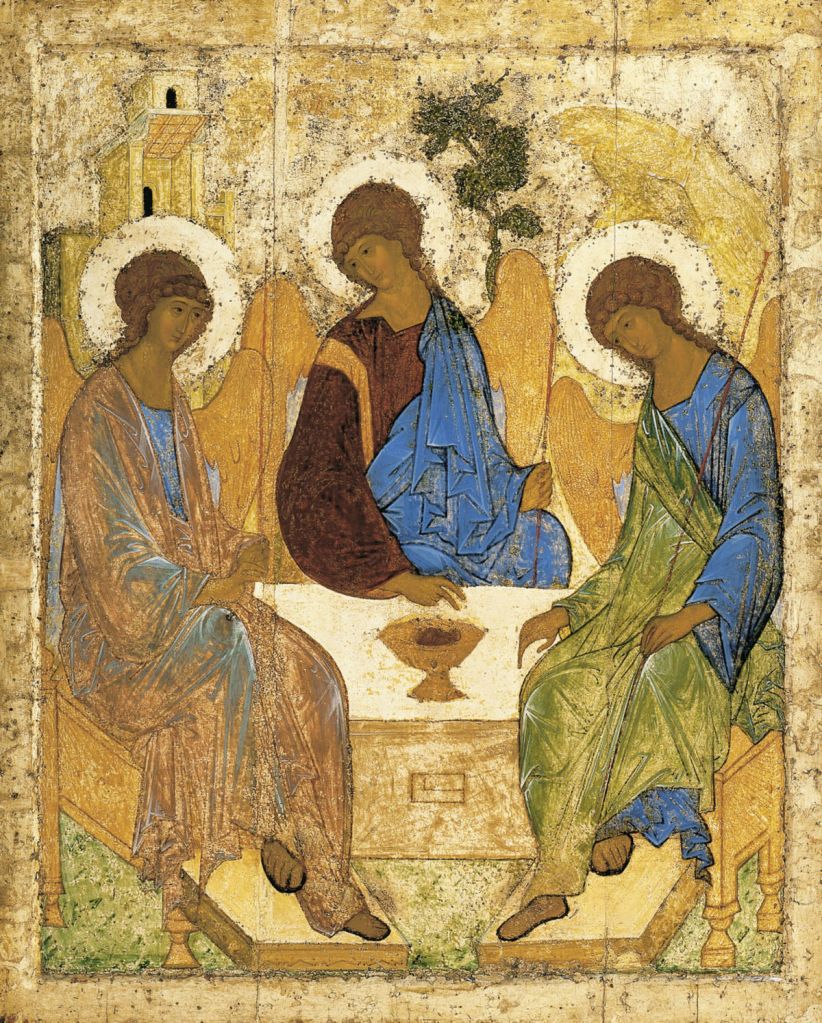
O Trinity! O Unity!
Be present as we worship Thee,
And with the songs that angels sing
Unite the hymns of praise we bring.

Today we remember that we worship a God who exists as a community of love. 

That is probably the best way to understand what the Trinity is. We have a God who exists as Father, as Son, as Holy Spirit. 

A community which is diverse and yet equal, bound together by love and able to extend that love beyond itself to the whole world. A community that is generous and generative, a community that is a sign of love and inclusivity and gives us faith and hope that love is indeed the power which enlivens the universe itself. 

We perhaps need that message more than ever in our world today:

-a world fragmented by inequality, 

-a world broken by hatred, 

-a world cautious about sharing love and living in love with one another. 

Martin Luther King, said: “Darkness cannot drive out darkness; only light can do that. Hate cannot drive out hate; only love can do that. So today we look to a community of love, the Holy and undivided Trinity, to teach us of love. 

We look to the Holy and Undivided Trinity to teach us of Love which knows no boundaries, Love which seeks out the lost and lonely and gathers them in, Love which unites rather than divides, Love which creates and encourages and energizes, Love which is the engine oil of justice and the foundation of peace, Love which speaks the truth, Love which welcomes, Love which is not envious, or arrogant or boastful or rude, love which bears all things, believes all things, hopes all things and endures all things. We look to this community of Love, to teach us that love never ends…

and that Love always wins.

Photo by Inna Lesyk on Pexels.com

A Prayer by Brian Wren

Living Love, beginning and end, giver of food and drink, clothing and warmth, love and hope; life in all goodness- we praise and adore you. 

Jesus, Wisdom and Word, lover of outcasts, friend of the poor, one of us, and yet one with God, crucified and risen: life in the midst of death- we praise and adore you. 

Holy Spirit, storm and breath of love; bridge builder- eye opener, waker of the oppressed, unseen and unexpected, untamable energy of life, we praise and adore you.

Holy Trinity, forever one, whose nature is community, source of all sharing, in whom we love and meet, and know our neighbour: life in all its fullness, making all things new: we praise and adore you. 

A Prayer of William Temple (1881-1944)

O God of Love, we pray thee to give us love: Love in our thinking, love in our speaking, love in our doing, love in the hidden places of our souls; love of our neighbours near and far, love of our friends old and new, love of those with whom we find it hard to bear, and love of those who find it hard to bear with us; love of those with whom we live and work, and love of those with whom we take our ease, love in joy, love in sorrow, love in life and love in death, That so at length we may be worthy to dwell with thee, who art eternal love. 

The Grace of our Lord Jesus Christ, and the love of God, and the fellowship of the Holy Spirit, be with us all evermore, Amen. 

The Unpredictable Breath of God

Photo by Adonyi Gu00e1bor on Pexels.com

We all have our habits, and our traditions, and our ways of doing things. Whether everything that we do now reflects exactly what was done in the past, is a moot point: many of the things that the church deems to be traditional are actually relatively new expressions of faith and practice. 

It comes as a shock to some that Jesus did not use the Book of Common Prayer and did not speak in Elizabethan English. Nevertheless we are connected to previous generations of christian’s through our shared history and our worship.  We would not be here, if those who had gone before us had not witnessed to Jesus Christ, and passed on their faith afresh to the next generation.   We also understand that over millennia, traditions change.   

The danger with the word ‘tradition‘ is that it can become a cloaked way of resisting change, by a rigid and dogmatic appeal to history.  Somehow by claiming to be ‘traditional’ there is a perception of not only being right, but also immutable to the point of exclusivity and it is always temptating to reference back towards a ‘golden’ age which might not have been so golden after all. There’s a joke you’ve probably heard from this pulpit before, how many Anglicans does it take to change a light bulb?  What do you mean change? That joke is so old, it is probably a tradition in itself.

Continuity is important for the church, but where and how we find our continuity with the past and how we adapt to a different future deserves some reflection.  Michael Ramsey in his reflections on the Holy Spirit,comments that this continuity through history is shaped by the sacraments, the apostolic ministry and the teaching of the church, and the Holy Spirit uses this shape to reveal the works of God. But, he notes, the Holy Spirit also acts in unpredictable ways, exposing, teaching, illuminating, judging, renewing. The Sprit he says, is still as it was and ever shall be, the unpredictable breath of God.

We can get so hung up on what Ramsey calls ‘fossilized traditions’ that new ideas and new opportunities are stifled.  We put out the fire of the Holy Spirit before it’s even kindled and we resist her unpredictability by setting our traditions in stone. 

Photo by Engin Akyurt on Pexels.com

In a way, this is where we might begin to feel uncomfortable. The festival of Pentecost, is just a little bit anti-traditional, a little bit subversive and it’s fitting that on this day of all days we might be a little nervous about what the Holy Spirit might be working in us, and what the Holy Spirit might do differently. After all the Holy Spirit is the unpredictable breath of God.

We are told in the scriptures, that the Holy Spirit is like a fiery whirlwind blowing through the lives of all believers: wonderful and terrifying. We learn that those on whom the Spirit rests were thought to have drunk too much wine. The Holy Spirit is variously described as being like wind, flame, water, like a bird on the wing, it cannot be tamed, or trained, or captured. 

TS Elliot writes in the four quartets.  “The dove descending breaks the air, with flame of incandescent terror”         

We cannot domesticate or control the Holy Spirit. When we sing ‘Come down O Love divine’ and ask the Holy Spirit to dwell in our hearts, do we realise we are opening ourselves up to change and transformation?  For those of us who find change difficult, that really can be a challenge.

The church is invigorated by the Holy Spirit and today we are reminded that the Christian faith, is about a change of heart and mind, a conversion of life and the transformation of the world.  A new song is sung, a new day has dawned, a new creation is begun. 

Two thousand years ago, something new happened and it shocked the world, God was born as a man, and lived on this earth, eating with sinners and tax collectors, upsetting religious authorities, witnessing to a new kind of kingdom, dying on a cross, rising from the dead…….all these things broke with tradition.  His followers were bound together by the flame of the Holy Spirit. They were sent out into the world to proclaim what they had seen and heard. The experience was life changing. The church was born. 

Let me take you over to the Manchester Whit Walk- every year church communities from across the diocese, process around the city with their banners and marching bands. Shoppers look on bemused as priests in their vestments and choirs and acolytes, crucifers and congregations walk in witness to Christ. 

In this act, the image of the church is transformed, from a static community contained within physical buildings, to a community which spills out into the streets, winding its’ way through shopping precincts, flowing like a river, burning away all embarrassment and fear. 

Perhaps this vision of the church is a little closer to the picture we are presented with in the book of Acts, a church on the move, a church going with the flow, a church without walls, a church which witnesses publicly to Jesus Christ in the market place…                                                                                  a church doing something new and unexpected, a church which is not afraid of proclaiming the word and works of God.

On this last day of the Easter Season, we again celebrate renewal and rebirth, it is yet another beginning in Christ. The unpredictable breath of God might be blowing through our lives at this moment-doing something new, do we not perceive it? And yes- that will be a challenge, and it may be uncomfortable and even terrifying.   

Our plans for ourselves may be overwhelmed by God’s plans for us. Things might have to change, heaven help us, we might have to change and do things differently. That is the risk of standing before the living God. But Christ says yet again, do not let your hearts be troubled and do not let them be afraid.

Some people say, that the church has never faced such a rapid period of change as it faces today.  I’m not sure that is entirely true, in every age, the church faces change and upheaval, but we can either retreat, lock the doors and bury our heads in the sand, or we could look up, start walking and let the Spirit lead.

 “The old order changeth, wrote Tennyson, yielding place to new, And God fulfils Himself in many ways, Lest one good custom, should corrupt the world.   There are those who say that we navigate uncertain times by holding on to our traditions, but empowered by the Holy Spirit we might want to say, we navigate uncertain times by holding on to Christ, and if we do that, what do have we to fear?   

The first disciples devoted themselves to prayer, they broke bread together with glad and generous hearts, and praised God. Long may those traditions continue, but at the same time, we still pray come Holy Spirit and renew again the hearts of your people, and kindle in us the fire of your love.  Amen.

Farewell, loss and corporate grief

Photo by Pixabay on Pexels.com

7th Sunday of Easter, 2020

Readings: Isaiah 65:17-end, Revelation 21:1-8, John 17:1-11

In the name of the Father and of the Son, and of the Holy Spirit, Amen.

The last few months have been for all of us, quite a journey. That journey, we each have to acknowledge, has been a journey through loss and grief. We have lost freedoms, we have lost certainties; plans that we may have had for March, April and May of this year, have suddenly been ripped up and thrown into the fire and it looks like any plans we may have had for the rest of this year will be disrupted too. Weddings, celebrations, travel, projects, new jobs, ordinations, schooling, exams, the list of things which have been disrupted goes on and on. Our lives have literally been turned upside down by a microscopic virus which has trampled through the whole world. Though the virus shows no partiality we have seen that the partiality in our society and the inequality in our world, has made some people more vulnerable to it than others.

Whoever we are, and whatever our situation, we have experienced a profound loss, individually and corporately, and for many in our communities that loss has been tragic and devastating and many have had to say the ultimate and final farewell to those they love, and some have been unable to say the farewells they would have wished. As a nation we carry the corporate grief of losing nearly 37,000 people, that number is still sadly rising. But these are not just numbers, these are names, and lives and loves. What effect will all this grief, and all these losses have on us, as individuals and as a society and as a church? 

One of the most well-referenced books on loss and grief is by Elisabeth Kübler-Ross, On Death and Dying. She reflects that after the loss of a loved one, the reality is, you will grieve forever. ‘You will not ‘get over’ the loss, you will learn to live with it. You will heal and you will rebuild yourself around the loss you have suffered. You will be whole again but you will never be the same. Nor should you be the same nor would you want to be the same’. When we experience loss of any kind, we may heal, and rebuild, and become whole again, but we will never be the same. We will have been changed and there is no doubt we have all been changed by our experiences over the last few months. 

This pandemic has also upturned our notions of what church is and how we do church. As we have experienced ourselves, creating church online is not without its issues. It remains an imperfect means of representing the gathered Christian community, and it has become clear that when we do return to our church buildings our gatherings will look very different. We cannot now rewind back to what we have always done. We need to imagine a new future. The church will have been changed by this experience too. We are all experiencing grief for what would have been. We have all said goodbye to long held hopes and dreams.

We have just heard in the Gospel of John (17:1-11), what is called the High Priestly Prayer of Jesus to his Father in heaven as he begins to face his future and say his farewells. He prays that what is yet to come, firstly his death and then glorification through the resurrection, will reveal the divine majesty of God to all people and help them build a new world in his name. He is the herald of change, the first born of a new creation.

The context of the farewell discourses as they are called, is important. We are with Jesus just after the last supper, the night before he was arrested, tortured and crucified. There is a kind of knowing in what Jesus says, he knows his end and the number of his days, but he also knows there is more to come. He is trusting his future to God, and the future of his disciples and the world he came to save. 

Jesus understands loss and grief, remember he wept at the grave of Lazarus his friend. He understands the reality of a world being turned upside down because he is a sign of a new world which emerges from the old. He sees his future and beyond his future. He sees into eternity. This is his goodbye, his farewell to those he loves but he knows and understands that what is to come will ultimately glorify the Father and change the world. This is an ending which also marks a new beginning, a farewell which inaugurates a divine greeting. He is a sign of new life walking out of a stone cold tomb. He is the change.

Jesus prays for his disciples, those he is leaving behind, he prays that they may be one, that they are united and bound together through love, that they will be protected as children of God. He is praying for the embryonic church, that it may flourish and blossom and bear fruit, through and beyond a time of testing, a time of grief and a time of uncertainty. 

The disciples are confused and upset about this coming and going of Jesus, they are distraught that Jesus speaks of leaving them, but they do not  yet realise that the limitations of their earthly imagination will soon be overwhelmed by the reality of God being with them for all eternity. 

Soon they will come to understand that from loss comes hope, from despair comes joy, from uncertainty comes faith, from death comes life. They will learn through Christ, how to see the world differently and how to carry the losses and the griefs that come with being fully human just as Jesus in his risen body also carried the wounds of the nails on his hands and his feet. 

Jesus Farewell discourse with his Father actually begins to open up for his disciples a new future for the whole of humanity. Stephen Cottrell, our Archbishop designate, said this week ‘we’re all having to re-imagine how we live our lives and how we inhabit the world. What inspired me to follow Jesus is that vision of a new humanity that I see in him.’

That vision of a new humanity is laid out in the readings from the prophet Isaiah and the book of Revelation that we heard in morning prayer. In Christ we are promised a new heaven and a new earth, no more weeping, or cry of distress, houses will be built, vineyards planted, enemies will become friends. A new city will come down from heaven as a bride adorned for her husband, the former things will pass away and God is making all things new. 

This is a vision of the Kingdom of God, a vision of what the resurrection means for the world, a vision for a people who will never be left alone, but always surrounded by the love of God.  It is a vision of hope and comfort, but it is, and let us not ignore the fact, also a vision of change. 

This week the whole church makes a prayer to God ‘Thy Kingdom Come’. In our current situation, we might begin to reflect on what that invocation means in our world today and what it means for each one of us personally.  Despite the pain and the loss and the grief we are all experiencing in so many different ways, and the wounds that we will carry with us, perhaps we are being given the time to imagine a new future where the cities we are called to rebuild after this crisis reflect more closely the kingdom of God we pray for.  When we pray Thy Kingdom come, on earth as it is in heaven, we are praying for change, we are asking God to make all things new. 

We hear very often these days, the phrase, ‘the new normal’- what will our new normal be like? We are told things will not be the same after COVID-19. And why should they be? We will not ‘get over’ the loss we have borne, we will learn to live with it. We will heal and we will rebuild our lives around the loss we have suffered. We will be whole again but we will never be the same. Nor should we be the same nor would we want to be the same.

Six weeks ago, we celebrated the resurrection of our Lord Jesus Christ, and remembered once again that in him is life, in him is a new creation.  As we all grieve what we have lost in the last three months, and say our farewells to what might have been, we also look to what Jesus Christ promises us and begin to live into that promise. We continue to celebrate the resurrection each day of our lives knowing that from death comes life.  

Jesus calls us to lift up our eyes and imagine a new future, a new humanity, and perhaps even a new beginning. He calls us to imagine a refashioning of creation itself, and look to a new dawn, a new day, a new heaven, and a new earth. 

We pray, Thy Kingdom come, on earth as it is in heaven. Amen.

A Call for Wisdom

Photo by James Lee on Unsplash

Sadly there are very few courses you can take to become qualified in Wisdom. There is no Module 1.1 Wisdom for the 21st Century, there are no degrees or doctorates which will automatically make you ‘wise’.  You cannot buy a degree in wisdom, even online! You have to earn it, or rather learn it, or rather be schooled in it. Anyone who has spent any time at all in any great university city knows that a superior intellect does not necessarily equate to great wisdom! 

To get this kind of wisdom and insight requires a different kind of learning – a life lesson, if you will, which is found in the rough and tumble of living in the world with other human beings and facing the challenges that life throws at us. 

For most of us, this wisdom comes through the experience of making mistakes and trying again and discerning the complexities of any given situation. This kind of wisdom is sometimes hard-won and may often leave scars which we carry around with us.  

Sadly, in the world today, in this moment, wisdom seems to be hiding. Hiding from many political leaders, quietly whispering in corners, unheard as decisions are made which affect each one of us in profound ways. Wisdom, if she is shouting at all, is shouting into a deafening silence as pride, pomp and politicking overwhelm our public discourse. 

From Proverbs 1

20 Wisdom cries aloud in the street,
    in the markets she raises her voice;
21 at the head of the noisy streets she cries out;
    at the entrance of the city gates she speaks:
22 “How long, O simple ones, will you love being simple?
How long will scoffers delight in their scoffing
    and fools hate knowledge?
23 If you turn at my reproof,[a]
behold, I will pour out my spirit to you;
    I will make my words known to you.

We need wisdom to raise her voice again. 

The pursuit of wisdom was a pastime of the ancients- they called this kind of wisdom, phronesis-That word phronesis, according to Wikipedia at least, is the kind of wisdom which relates to practical things. The kind of wisdom to whom you go for advice. It is sometimes translated as the word ‘prudence’, a word which is far from fashionable – but more positively, is a word which alludes to carefulness, mindfulness, attentiveness and common sense, a kind of right acting in the world with due thought –a kind of daily ethics.  

If you can bear to think forward to advent, these two ideas come together in the first of the great O Antiphons, in which Christ is heralded as the personification of divine wisdom:

O Wisdom, coming forth from the mouth of the Most High, reaching from one end to the other, mightily and sweetly ordering all things: Come and teach us the way of prudence.

For Christians, our schooling in wisdom, comes from following the example of Christ, who we believe is the foundation of all wisdom, and knowledge, and understanding. Throughout the gospels Christ is known by many as a good teacher- he teaches in community, he teaches through parable and story, and also by example, very often people go to him for advice but his teaching isn’t about intellectual knowledge, it’s a means of communicating that fullness of life which can be found by walking in the way of his commandments.We follow those commandments, not just by what we think or what we say, but by what we do and how we act. Jesus teaching always seems to suggest a possible course of action to those who have ears to listen. 

Photo by ROBIN WORRALL on Unsplash

To the rich ruler, Jesus says, ten out ten, you know the law in your head-you are very clever, but what are you going to do about it? You talk the talk, but can you walk the walk? No wonder the rich man looked sad- he perhaps hadn’t bargained that his faith would have a negative impact on his material wealth. If this isn’t a warning against prosperity gospels, we cannot be reading it properly. 

The rich man first asks Jesus what he must do to inherit eternal life. Jesus answer seems to suggest that all that we do in this life, is a simply a prelude to what is to come.  We are witnesses to provisionality, and with eternities perspective, the trappings of this life and the riches and accolades and degrees we accumulate are simply straw when compared to the treasures of heaven.  

If you follow Christ it will certainly affect everything that you are, everything that you do, your thoughts, your loves, your possessions, your family, your friends, your work, your whole life. It is all consuming, it is a whole way of life where the intellectual and practical and spiritual come together, where the holy and domestic are intertwined, where the liturgical and the secular begin to bleed into each other, and it is for that reason that the rich ruler becomes rather sad. Such a way of life is a big ask. A big commitment.

There is someone, in the history of Christianity, who has captured this challenge in a most remarkable way. He has entwined the intensely spiritual, with the deeply practical. He has left us with a textbook of daily ethics, and the means of learning how to live-out this life to which Christ calls us, a life where everything can be offered to God and everything can be inhabited by Christ.

St Benedict, with incredible skill, offers in his Rule a handbook to make the very radical demands of the gospel a practical reality in daily life.  There is instruction on prayer and worship, on humility and obedience, but equally, he gives advice on the most ordinary everyday situations: how much ale a monk should consume, how lazy monks should be reprimanded, and even a number of directions on behaviour in the kitchen including the measure of food and drink to prevent a monk being overcome by indigestion. 

Some of his points may seem utterly trivial at first sight, but What is so encouraging, is that the rule is realistic and attentive to the tensions that being in community can create. He understands the human condition with all of it’s faults and all of it’s potential. Benedict offers sensible practical advice grounded in spiritual wisdom. 

Over a thousand years before George Herbert, Benedict also understood that even sweeping the floor, and pure drudgery could be divine, he understood that Christ the teacher, was the source of wisdom, and could be found in all things. 

Teach me, my God and King,
in all things Thee to see,
and what I do in anything,
to do it as for Thee.

To scorn the senses’ sway,
while still to Thee I tend;
in all I do be Thou the Way,
in all be Thou the End.

All may of Thee partake;
nothing so small can be,
but draws, when acted for Thy sake,
greatness and worth from Thee.

If done t’obey Thy laws,
e’en servile labors shine;
hallowed is toil, if this the cause,
the meanest work divine.

George Herbert (1633)

Bob Van Aubel on Unsplash

In the prologue to his rule, Benedict seeks to establish a school, a place of learning for the Lord’s service where wisdom can be learnt.  Those who begin their education and follow his rule are called to persevere in community, so that they may share in the sufferings of Christ and in his glorious kingdom.  The school of which he writes is Christian community, and his rule is something which can still speak into our Christian communities today with very little adaptation. It’s a priceless treasure, worth much more than silver or gold. 

Those of us who are part of Christian Communities understand that we hold together, sometimes in tension, the practical and the spiritual, the detail and the big picture: the basilicas and the bingo nights, the plainsong and the parish lunches, the sursum corda and the synods, the prayer meetings and the PCC.  That the Community of the Church of England has been arguing over where holiness can be found in recent weeks is telling. Is the kitchen really less able to speak of the divine than the temple? Why are we pitching the domestic against the ecclesial? Why are we causing division amongst ourselves when God is all in all? Perhaps we have been duped into this argument about the right place for worship to happen, whether at home, or on screen or in church, and miss the more important point about who it is we are called to worship. 

Being a Christian in the world means we exercise our faith, not only through designated acts of worship but also in the queue at the checkout- at the board meeting, in the lecture room, the pub, in the ballot box, at home with our family and friends, and in how we make and spend our money. Benedict understood that the wisdom of God is found in the detail of day to day living as much as it is found in the grand theological narratives. His rule for living is permeated with worship throughout each and every day, the psalms run through every week, praise and prayer are so closely aligned to daily life that they are indistinguishable.

Like the rich man, we may sometimes feel daunted by the demands of the gospel, but though it may be impossible for us alone to progress, nothing is impossible for God.  Benedict called his rule, ‘a rule for beginners’, it seems there is always more to learn, another possibility, another question. A prudent and wise Christian knows that they do not have all the answers- and there is always the possibility of being changed by what they learn.  

This kind of practical wisdom is never achieved by passing an exam, it is evolving and growing and emerging as we journey in community and navigate the various storms of life.  And in places where Christians meet one with another, we are like a raft of pebbles at the bottom of a stream, constantly moved, shaped, dragged, smoothed; chinking up against one another as living water bubbles over us.  This is a place where lessons are learned, this is what life together means. This is a place where with an eye to heaven, and our feet firmly on the ground, we grow in wisdom and we practice our faith in the very best sense.

What Benedict does so well is offer a holistic vision of the Christian life which permeates everything that we do – eating, drinking, praying, reading, working, worshipping and how we should interact with our brothers and sisters. This way of living is not just for ‘Sunday best’ but for our whole lives, and this advice can be interpreted and re-interpreted for various situations in which we might find ourselves. And what a raft of situations we find ourselves in.

As the world seems to be spinning out of control, the call to community is ever more urgent, the call to obedience and humility is ever more critical. How do we respond to a global pandemic which is fragmenting society, challenging our ways of being and exposing our weaknesses? How do we work towards building up rather than pulling down? How do we bridge the ever-widening gap between rich and poor, strong and weak, the powerful and the disenfranchised? How do we counter a growing sense of division and prejudice in our own country? In all this, where is wisdom to be found?

There is of course our primary call to worship and prayer, ‘Love God with all your heart, mind and strength’ but equally we require a practical kind of wisdom which causes us to translate our belief into tangible effect and point to the Kingdom of God, through what we think, and speak and do ‘Love your neighbour as yourself’. 

Benedict is not afraid to start small with the little things. Perhaps, after Benedict, we might begin by learning that the smallest act of kindness, offered with Christ on our lips and in our hearts, may yet lead to a transformation of life and the transformation of the world.

Love and Community: Julian of Norwich

Photo by Ben Mater on Unsplash

Julian of Norwich- A saint for our times. Friday 8th May.

‘If I look singularly to myself, I am as nothing; but in general I am united in charity with all my fellow Christians, and in this oneness of charity stands the life of all mankind who shall be saved. For God is all that is good, and has made all that is made, and loves all that he has made.’ 

Revelations of Divine Love, VI

Julian of Norwich is the name by which she goes, but we do not know her real name. 

In the late Middle Ages, Europe was wracked with plague and life was incredibly unsettling with civil unrest, war and raging inequalities. It seemed that neither the formal channels of church nor state could navigate these choppy waters and people began to try and make their own sense of the world around them quite apart from the more proscribed and conventional means of religious and political discourse. 

Into this context we come across a woman in her thirties, who on this day in the year 1373, was overwhelmed by a sudden and severe illness. She was so sick the priest was called to her home and the last rites were said over her failing body; a cross was placed before her eyes as a focus for prayer.

In this state of utter peril and vulnerability, facing her own mortality, she had a series of visions revealing aspects of the love of God. She journeyed through these visions and her illness, and emerged as an anchorite, a solitary, a walled-up person, living a vowed life in a lockdown of her own choosing. Within that confinement she devoted her whole life to pondering the expansive divine mysteries into which she had been initiated. 

She attached herself to the Church of St Julian in Norwich, and so took upon herself that name. She wrote down what was shown to her, in what was to be the first book written by a woman in the English language, The Revelations of Divine Love.

Her visions are not for the fainthearted or for those with a closed mind. Her vision is of God as both Father and Mother. Her vision of God is messily incarnate, even gory. God was made flesh in all of its reality. There was blood, and pain and sweat and tears but from this singular suffering and showing, Julian developed an understanding of God which was social and communal and political. Through her own body she came to understand what it meant to be part of the body of Christ. 

Even though she never left the house, her understanding of God was not confined to the kitchen, we might say. Though developed in her cell with only four walls (and a cat) for company, her visions were expansive, and in the absence of a grand building to inspire her, her supposedly enclosed faith built a temple to the Kingdom of God which was ambitious, architectural and all encompassing. 

She thought of her visions as not only for herself but for all people. She acknowledged that she was only able to find her own identity by looking to others in love and charity. 

This is perhaps why Julian of Norwich is a Saint for our times. She is a saint for all of us who feel isolated and debilitated. She is a Saint for all of us, who, from a situation of isolation want to see community and society strengthened. She seemed to understand that to be human was to be social and indeed political. To be human was to care and have concern for all people, for all things. It is a divine paradox that a solitary, isolated woman would offer this vision of unity to the world. 

From her cell she was able to speak into the world about the importance of community and her ministry and her witness was acknowledged to have an important social function. Her visions helped people place their lives in a bigger context and she was keen to stress that the context of all human life was set before a loving God in whom all would be well, and all manner of things would be well.

It was in this frame that she was able to reflect on suffering and the notion of evil, and the wonder of creation. She said that it was love that determined our existence and not sin. Love could overcome anything and everything.

If we needed evidence that this is true, we need only look around. We do see love shaping the world today and calling the world out of a situation of calamity and chaos. We see selfless acts of love between families and friends and among strangers who have broken out of the patterns of serving self, to care for all. 

Ironically, it has taken a situation of lockdown and personal isolation to help us all realise that we do not exist as islands. We are all bound together in this bundle of life and we are dependent upon one another immeasurably. Our old hierarchies are being smashed to pieces as we realise that, for example, the people who we pay least, we need most and the people whom we have tended to value most, by their position or wealth or celebrity, have been found lacking in judgement, wisdom and mercy.  We can no longer justify our blind spots as we are suddenly given a view of the world as it really is.  When we put love first, it does tend to turn everything upside down. 

Photo by Mike Erskine on Unsplash

Julian’s vision challenges us in our situations of isolation to work towards a world where compassion and our love for all people undergirds the society we build next. Powerful rhetoric won’t be enough to rebuild this new society, only the simple act of love reaching into every corner of our systems and structures, will be able to carve out the future we all long for. This politics of compassion will always put love first and remind the world that we were made by love and for love. 

What a world it might yet be, if we could build it on the foundation of love. What a world it might yet be, if love really was our meaning. 

From a single cell, over six hundred years ago, in the midst of turmoil and tribulation, a young woman asked the same question…

I learned that love was our Lord’s meaning. And I saw for certain, both here and elsewhere, that before ever he made us, God loved us; and that his love has never slackened, nor ever shall. In this love all his works have been done. And in this love he has made everything serve us; and in this love our life is everlasting. Our beginning was when we were made, but the love in which he made us never had a beginning. All this we shall see in God for ever. May Jesus grant this. 

Julian of Norwich, 1342 –c1416

Courage: St Etheldreda

A recent article in the Church Times, advised preachers to avoid sermons about Wonder Woman, a recent cinematic blockbuster.  I have to admit, preaching on the Feast day of St Etheldreda, the temptation is certainly there to cast Etheldreda as a holy superhero.  Such a response would favour the myth of Etheldreda, over what may have been the very ordinary but Christ-like life of Etheldreda. We all need our superheros I guess, but perhaps a real person can be more inspiring?

The Venerable Bede, in his history, certainly brings the account of her life down to earth and without glamour. He comments that from the time of her entry into the monastery at Ely she would never wear linen, but only wool (the cheap alternative), and she would seldom take a hot bath except on the eve of great festivals such as Easter, Pentecost and Epiphany -which gives a whole new meaning to the idea of the odour of sanctity…

She rarely had more than one meal a day and remained at prayer from matins until dawn, unless prevented by illness. I can’t help thinking that in comparison to dodging bullets and spinning into boots and a bodice, Etheldreda, Ely’s very own wonder woman, might have been rather boring. 

Her life certainly doesn’t sound heroic in the superhero sense of the word, but look more closely and it does perhaps represent the courage and fortitude of a 7th Century Christian in following their vocation and consecrating themselves to the Lord-which in all honesty, should be heroic enough for any of us. 

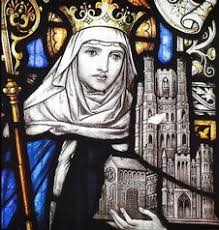
Etheldreda’s story, as we know, begins in plenty and riches- her life could have been very comfortable if only she had persisted with her two arranged marriages and given up on God. She was a Queen, and could have counted on the wealth and status that such a position bestowed on her, she could have worn silk, and bathed daily in scented oils, if her will desired it. 

And yet, her mind was set on other things- and with singleness of heart she pursued her calling, renouncing her privilege to build a holy house on an island in the middle of the Fens. A house not made of things of gold, silver, or bronze, a house not made of precious stones, or marble, but a house made of prayer. 

This again, may not be heroic, but it does perhaps show us what the Christian virtue of courage looks like. The word courage is derived from the French word for heart. Courage is a condition of the heart enduring in the face of adversity. The Greek philosophers viewed courage as related to valour and bravery on the battlefield and particularly aligned it with military analogies. Fight the good fight and all that.

However, medieval philosophers, such as Thomas Aquinas, re-cast courage or fortitude, as he called it, as a Christian virtue. In contrast to super-heroic physical strength and bravado, courage was about the strength of the soul and the quiet determination of the heart to overcome adversity. This lead the twentieth century writer CS Lewis to suggest that Courage is not simply one of the virtues but the form of every virtue at the testing point. 

Courage is, those actions or that attitudes of mind, which embody hope and echo some Christ-likeness, always pointing towards the good particularly in testing situations. -Revealing a way of life that flies in the face of fear and confounds worldly expectations through faith. To put it simply, courage is the virtue which emerges when the going gets tough.

In what we might describe as an extended definition of courage in the letter to the Phillippians, St Paul says, ‘I have suffered the loss of all things, and I regard them as rubbish, in order that I may gain Christ and be found in him’, – words which could so easily be the words of St Etheldreda, who counted her wealth and status as nothing before Christ’s call on her life.

Our gospel reading then follows on from a conversation between Jesus and a rich young man who finds it very difficult to lose anything for the sake of Christ and the promise of eternal life. How hard it will be for a rich person to enter the kingdom of heaven. The more one has, the more painful it is to give it away. Most of us find it very difficult to count our gains as nothing, whatever they may be. Jesus acknowledges, that following him will take courage of mind and heart- The focus of the gospel is money and wealth- but it could be anything to which we cling, anything we cannot give away for the sake of Christ.

In response, something is troubling Peter. The disciples feel they have given up everything to follow Jesus-what more can we give, they ask? 

Give of everything and you will be rewarded. Jesus says.

Give of yourself and you will find yourself. 

Become as the very least, and through me you will be the greatest. 

Etheldreda did give up everything to follow Christ, and for her courage in the persistent, and enduring love of Christ above all else, she takes her place in the communion of Saints. 

A moment of courage, in the life of Etheldreda, is painted in the legend,  where she stands firm against those who wish to possess her. In the midst of the chase, she turns to face those who pursue her- she looks danger in the eye with true courage.  And Lo, her staff then breaks into flower, the floods rise and protect the saint from attack, freeing her to Christ’s service. 

Her courage to live in the light of Christ, to suffer with him, to die with him; her courage in forgetting what lay behind and striving to what might lie ahead in the heavenly call of God, provokes a miracle and the sweet fragrance of Etheldreda’s saintliness built this house of prayer, and her example still pervades our common life together 1300 years later.

In the end, Etheldreda stood with courage to be who God called her to be. She had courage to commit her life to the God whom she loved and live out the gospel, and that was no more difficult for Christians in the year 673 than it is today.  In the face of adversity, her courage held fast because she knew, she trusted, she had faith- that with God all things were possible. Dare we trust that this is so?

We actually diminish Etheldreda if we imagine she was a medieval wonder woman. We can learn more from her life, as very likely the first English female saint, if we view her as a human being trying to respond to a call from God in the midst of worldly demands and temptations. 

Etheldreda’s story might also give us hope in these times of anxiety and uncertainty when we perhaps feel oppressed by fear and hatred and growing discord within our communities, and in the life of our fractious world.

We don’t need imaginary superheroes swooping in, and it is unlikely that any such superhero will appear, but we do perhaps need to find the strength within ourselves to be people of courage for the sake of Jesus Christ. 

People who go out into our troubled world in peace, being of good courage and holding fast that which is good. Rendering to no-one evil for evil, strengthening the fainthearted, supporting the weak, helping the afflicted, honouring everyone, People who love and serve the Lord.

May Etheldreda, and all the saints pray for us today, in the name of Christ, to whom be glory and praise and thanksgiving, now and to the ages of ages, Amen.

Preaching Truth through Personality

Photo by Flickr on Pexels.com

Preaching Truth through personality, 

You will know I’m sure that the title above comes from Phillips Brooks, the great American Preacher- but I want to use this title as a kind of foil. 

I want to begin to unpack what we might mean, when consider our identity as a preacher- and use Brooks idea of ‘Personality’ to help us do this. 

Preaching Truth through personality– I want to begin with a conundrum. Despite saying this and meaning it- Brooks very rarely talked about himself in his preaching, but his preaching certainly revealed something of who he was. His particularity. His Personality. His identity.

Phillips Brooks is said to have been very shy, he couldn’t hold eye contact, his physical presence was large and expansive and his delivery was said to be stiff, and he revealed little of his personal life.  And yet he drew crowds of thousands, gave lectures on preaching and is remembered as one of the greatest preachers of all time. What was his secret? 

In his lectures on preaching given at Yale in 1877, he said preaching has two essential elements, truth and personality. It is primarily a testimony to faith. He said preaching has to be face to face- person to person, heart to heart, and if preaching in any way applauds the preacher, rather than God, it is not preaching either. 

Preaching is pre-eminently personal. Brooks said that however much the Gospel is capable of being packaged in dogmatic form, its truest statement is not in dogma but in personal life. And yet, he was also encouraging a kind of self-effacement in preaching, or could I put it more theologically- a self-emptying? What might it mean to be a kenotic preacher?

I think I want to say that preaching exposes us. It exposes our faith, our theology, it exposes us as who we are, and it exposes our God-given ‘personality’. We are made vulnerable and naked when we preach, and therefore we should all approach the pulpit in fear and trembling. 

There is no identity that we can hide behind when we attempt to preach the truth through personality. The truth, Phillips Brooks said, must come through the person, not merely over his lips, not merely into his understanding and out through his pen….

…It must come through his character, his affections, his whole intellectual and moral being. It must come genuinely through him. 

Therefore, preaching must reflect not only our identity but our integrity and our authenticity.  In common parlance, we might summarise this as something the Church is not always very good at: practising what we preach. 

For over seven years I was fortunate enough to teach ordinands, readers and laity, a short course which introduced them to the ‘craft’ and ‘nature’ of preaching. As part of that course, every year- I had the privilege of marking 12-15 video’d sermons, which the students submitted at the end of the module. 

Of course I had my guidelines and marking criteria to follow- but I have to admit I was always looking for a quality in their preaching which is rather difficult to quantitate, I call it the ‘sparkle’ – a technical term you understand- or the ‘X-factor’! 

That something which hits you right between the eyes and straight in the heart- that ‘something’ which communicates and at some level makes me laugh or cry or get up from my desk somehow transformed and eager to change the world for Christ’s sake, something which stirs the soul. 

This is very much an anecdotal observation, but sometimes the most eager (and loudest) students in class were the most nervous and ineffective preachers and the shy reticent types fielded a surprisingly confident pulpit persona- that’s a crude analysis which probably means nothing, but this leads me to conclude that we need to be careful about how we, today, in our ‘personality’ driven world, define preaching through personality. Maybe we would nuance this maxim for today in our celebrity driven culture and some would say celebrity driven church.

Not until I read Gregory the Great’s Pastoral Rule did I realize there could be a comparison here to the likes of Isaiah- confident in his request that God might send him– and Jeremiah, the reluctant prophet who claims, rather like Moses that his immature speech will not make him the best choice for the job in hand. How are we ‘commissioned’ and ‘called’ to preach? 

Gregory comments that irrespective of the pathway to preaching, the end result is dependent it seems, not on skill, or confidence or even experience, nor dare I say it, on personality! 

The power of their words, is rather dependent on the fact that the voices of both Isaiah and Jeremiah, flowed from the fountain of love, Isaiah’s love of his neighbour, Jeremiah’s love of God. They inhabited the role of messenger…not only with their words but with their whole life.

So, I want to say, our primary identity as a preacher, has to come from our love of God and the truth that God loves us as we truly are, as preachers we inhabit a calling. 

Of course, these qualities were not represented in the learning outcomes or objectives of the course on which I taught- but for my own learning experience as a teacher and preacher, this is the element of preaching I am most interested in: 

The undefinable mystery at the heart of the minister of the word. The mystery which made thousands flock to hear Phillips Brooks. I want to think about the mystery and ontology of the preacher herself.

I am also looking, for some interpretive or imaginative framework which helps me connect the word of God to the context I am in, the culture I am in. Implicitly or explicitly, some kind of theological, cultural, ecclesial, spiritual hermeneutic, or way of seeing, which allows both a response from me the listener and a connection to both the living tradition of the church and the realities of the world. Preaching truth, is therefore relational as well as personal. 

What about the ecclesial identity of the preacher? Though many say that preaching is outmoded- and irrelevant- I have to say I think it is still a medium to be reckoned with and I believe it is still a medium which, is part of the process of transformation which with God’s grace, happens in every act of worship. Preaching has to be embedded within an ecclesial community and therefore the preacher emerges, is brought forth from that gathering to share a truth, their truth, the truth. 

Rowan Williams argues that preaching is not ‘something extraneous to the identity and integrity of the church’. It’s not in that sense ‘outdated’ or ‘irrelevant’. In the same way that prayer and sacrament are vital- so is preaching. Preaching is part of our ecclesial identity. The preacher is also preaching a truth greater than their own, they stand for the Church, they are in a position of power and authority, so how is this handled and shaped accordingly, and held lovingly and humbly? 

Williams says that though the word ‘preach’ may have negative connotations, it nevertheless should be part of the same enterprise to which the Church is ultimately committed- that is, to transform the human world by communicating to it in word and act, a truthfulness that exposes the deepest human fear and evasions and makes possible a new kind of existence that can pass beyond these fears to a new liberty. Preaching Truth, through personality. 

Is the sermon through the preacher an embodied place of interpretation and a place from where culture can be changed? Can sermons, can preachers, really change the world as Rowan Williams would hope? Or at the very least can they change the attitude or direction of our worshipping communities? Can we as preachers ever hope for more than- ‘nice sermon vicar’ as we shake hands at the door? 

Phillips Brooks offers that a primary foundation for preaching truth through personality is preparation. I think this is important, because aren’t we sliding into danger if preaching is purely experiential? We need to be grounded. Brooks seems to balance out this risk by being attentive to study and prayer and the broader missional and pastoral agendas of ministry. 

I soon discovered that in parish life, rightly or wrongly, the act of writing a sermon became in general the locus for my own reading and theological reflection- it became the place of interpretation, translation and sometimes the foundation of prayer, the place where I for one try to make sense of scripture, the church and the world. A place, where week by week, and year by year, I as a Preacher, found my identity. 

The sermon, for very practical reasons, has not become an end in itself but an event which bubbles up from, if you will, my own ‘lived’ theology- my own Christian response to God- which is embedded at this time in the concerns, contexts and lived theologies of those I minister to. 

Obviously the sermon is influenced by the pastoral milieu of my context- but it is also influenced by scripture, theology, culture, liturgy and missiology. Arrogant as it may seem, I pray that what I say will somehow be a transformative event- yes didactic, to some extent with an element of teaching, yes, prayerful, as it hopefully arises from the life of prayer but also evangelical and in the vein of Henry Mitchell, American Homiltician, ultimately ‘celebratory’ an Easter Word for the world. 

Brooks encourages the preacher to aspire to breadth and depth and expansiveness, to articulate a largeness of movement and great truths in order that our work grows freer, bolder, and broader: He calls these great truths: God’s sovereignity, Christ’s redemption, our hope in the Spirit, the privilege of duty, the love of humanity in the saviour. These should be, he argues, the strong music that our souls should try to catch through preaching.

I pray that through me the words that come out of my mouth may somehow point always and only to wonder of God, the good news, liberty, justice and peace. 

So for all the tricks that I can teach on a preaching course, the exercises in exposition, and work on delivery, content and structure, and I think all of these things are really, really important and worth teaching, what I really want to say, is that preaching is an event which arises out of a personal relationship and response to the living God. Brooks says ‘Be yourself by all means, but let it be by winning a true self, full of your own faith and love. 

Somewhere in that mix, is where the primary identity of the preacher might lie.  Preaching truth through personality.

We might say that preaching is an ‘event’ which arises from the lived out faith of the preacher. It is first and foremost an expression of our faith.  As a preacher we are not just the stand up mouth pieces for someone elses words. We’re not just reading machines churning out texts which we have downloaded from Saturdaynightsermon.com. We are messengers of God. 

And we are who we are – and there is a sense that the words of our sermons are intimately connected to who we are, personally, before God and who we are in the midst of the Christian Community. 

Just in case our personality, or dare I say, ‘identity’ becomes more the focus of the sermon than God, it might be necessary to inject St Gregory’s discipline of humility into the act and art of preaching- this isn’t about the cleverness of the preacher- but the truth that they are gifted to impart, not by their own strength but by the strength of God. They can use fine words or powerpoint presentations, they can make people laugh and cheer, but these things alone will not be enough.

Remember Isaiah in his eagerness had a hot coal stuffed in his mouth to purge him of too much self-reliance. Brooks talks about the best sermons being a message from God delivered from one person to others. The best preachers in his opinion are those who don’t get in the way of the message, so as you listen, you forget the preacher altogether. That is as it should be.

As we’ve touched on already, preaching is more than a personal expression- it is part of the identity of the church. We anticipate and hope that our preaching leads to something- perhaps a change in attitude or even, affirm some conviction in those who are listening. 

But perhaps most of all, every preacher prays that their divinely inspired words might ignite a movement of action in the world beyond the church doors, or a change of heart in the listener. That the message we have been given has a life of its own beyond our power or intention. That it is truth, beyond personality. 

In that sense the sermon is always straddling the convergence of church and world, personal and public, making sense of the church to the world, and making sense of the world to the church. 

William Willimon, the American Preacher, in dialogue with the writings of Karl Barth on Preaching, uses two images to understand the Preacher. 

The first is a representation of John the Baptist by Peter Brueghel. It is called the Preaching of John the Baptist, and you might find it difficult to locate the Preacher in this representation, so embedded is he in the crowd to whom he is preaching.  

The second image is the altar piece by Grünewald, John the Baptist. Here we see another facet of the identity of the preacher.

In this interpretation the preacher, stands off to one side of the Crucified Christ and dares merely to point. Willimon calls these “two Barthian tests for faithful preaching”. The first: “hint, pointing toward, inclination” and the second: “distance, detachment”. 

I wonder how our ideas about ‘identity’ fit into this ontology of the preacher? 

This leads me to my final point really, whoever we are, of whatever denomination, whether lay or ordained, I feel there is an urgent need within the church to explore the ontology of the preacher, the vocation of the preacher, the witness of the preacher, and the sacramental act of preaching. 

And I feel that if we are able to begin thinking of the preacher in this light- we might understand a little more of what it means to preach with identity, and preach truth with personality.  

Open the Doors

In the name of the Living God, Father, Son and Holy Spirit. 

To be a wit-ness is to see something, to observe something or come to know something.

It usually means you saw or heard something happen, and the testimony of your eyes or your ears is important to establish the truth.  The four Gospel’s, Matthew, Mark, Luke and John can be thought of as collections of eye witness accounts of the life, death and resurrection of Jesus Christ. 

They are all slightly different, with different perspectives, but the similarities are remarkable. These so-called stories, are actually gathered accounts of what people saw, accounts of what people thought and felt and  believed in response to a most extraordinary event and the Christian faith has trusted in these witness accounts as a means of revelation. 

The earliest Gospel of Mark, was written around 30-40 years after the events we have remembered this past week, written down for future generations as those who had been first hand witnesses to the life of Jesus were beginning to disappear. As St John says- these things were written down so that others may come to believe. 

We hear today of what happened a week later when the risen Jesus appeared to the disciples.What happened after the risen Jesus stood among his disciples came and stood among them and said ‘Peace be with you’.

After the Resurrection, the question for those disciples, would have been What do we do now? “what happens next?” Where do we go from here? We have been witnesses to these things- but what difference does this make to us?

The resurrection event was so real to them, that they didn’t just write it down, they had other priorities- it had a profound impact upon their whole lives which took on a completely different direction from that day forward, everything changed, things couldn’t go back to how they were. 

And that one event, changed history as we know it and we are here precisely because of what those disciples did next.  

The disciples formed a community, we hear about this community in the Acts of the Apostles which begins to provide an account of what happened in the weeks, months and years following the Resurrection of Jesus. 

Together the disciples shared all they had, they gave away what they didn’t need, they prayed and worshipped together and broke bread, and they did all this as a testimony, as part of their witness to what had happened. One of the most important testimonies to the resurrection of Jesus, is the effect it had on those who witnessed it.  

They lived out this new truth each and everyday. In the twinkling of an eye, they were all changed forever. Their world was changed forever. They took amazing risks to tell others what they had seen and heard. They gave away everything to live out this truth and share their testimony further. 

Thomas, and the other disciples who had known Jesus for three years or more, were so sure that they had also seen him after he was raised from the dead that they all eventually went to death or exile rather than deny that conviction.   Some travelled the world, stepped out into unknown lands to bear witness to this truth….. quite a turnaround, for a bunch of men who initially sat behind closed doors in fear.  Their witness was the seed of the Church of Christ which we are part of today. As we know, some of the disciples became martyrs, a greek word which actually means ‘witness’.  They died for what they believed to be true.

According to tradition Thomas went to Syria and then on to India. There he died bearing witness to his faith. The one who wanted to touch the wounds of Jesus with his own hands, received his own mortal wounds, but his faith, his witness, his life, was built on what he saw that day in the upper room -and as soon as he said those immortal words ‘my Lord and my God’ his life would never be the same again. 

Today, our faith, is built on the witness of those disciples. Our faith is built on their testimony. We trust their eye witness accounts given to us in the Gospels.  At the end of John’s gospel it says: 

Now Jesus did many other things in the presence of his disciples which are not written in this book.  But these are written, so that you may come to believe that Jesus is the Messiah the Son of God, and that through believing you may have life in his name, 

Our faith is also built upon our own witness of the risen Christ who we see and hear in the holy scriptures, the risen Christ we receive in bread and wine at the eucharist, the risen Christ who is with us as we sing and worship, and gather together in prayer whether actually or virtually, the risen Christ who we witness in the lives of  other Christians who have followed him through the centuries and the risen Christ who is found in the church and in the world of today, the risen Christ we see all around us, in every moment, in every detail of our lives, in our homes and among our families and in the face of friend and stranger. There are signs of resurrection all around if we able to open our eyes and our hearts to the reality of the risen Christ.

As time goes on, there is more evidence, not less, that Christ rose from the dead. The evidence accumulates in the world because of the witness of those who have not seen and yet have come to believe, those whose lives have changed because of their belief. 

The moment we witness the living Lord for ourselves, the moment we see and hear and touch Jesus Christ, and say, as Thomas said, ‘My Lord and my God’, our lives will never be the same again. 

If we have witnessed the resurrection, if the risen Christ is part of our testimony as Easter people, the important thing for each one of us, is what we do next. What do we do a week later? How has this changed our life?  The doors of our homes may be locked, but are the doors of our hearts open?  

After the Resurrection, the question for those disciples, would have been “what happens next?” What do we do now? We are witnesses to these things- but what difference does this make to us and the world we live in? 

We might ask ourselves those same questions today as people who have come to believe in the one and only living God, and been given life in his name. 

Alleluia, Christ is risen, he is risen indeed. Alleluia. 

Blog at WordPress.com.

Up ↑