

Part III Why are you weeping?
Why are you weeping?
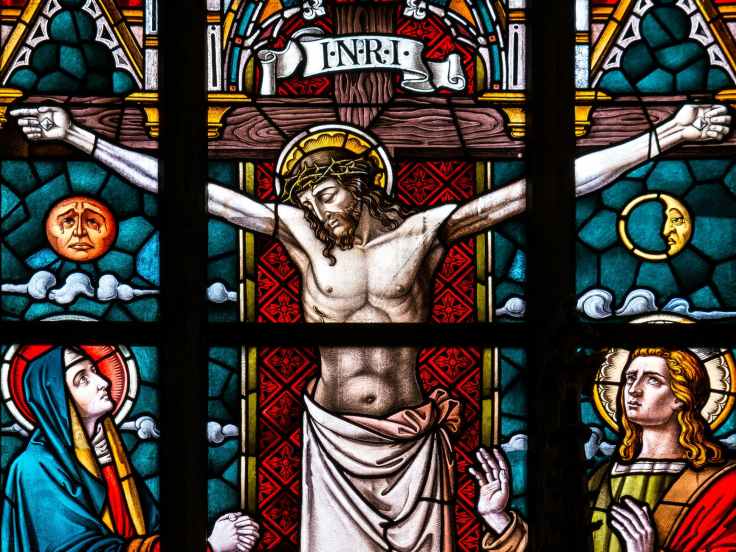
As Jesus set his face to calvary, and carried the heavy cross through the streets of Jerusalem, the wood biting into his skin, a group of women, began weeping and wailing for him. Did they feel more keenly what he was going through, overwhelmed with empathy and pity?
Jesus hearing their cries turns to them and says:
Daughters of Jerusalem, do not weep for me….weep for yourselves and for your children.
What did he mean? Why did he reject their tears?
Perhaps Jesus rejected their tears because he carried more than his own grief to the cross he was carrying the sins and sorrows of the whole world, past, present and future.
The Prophet Isaiah says “surely he has borne our griefs and carried our sorrows…upon him was the chastisement that brought our wholeness, and with his stripes we are healed”
Jesus carries with him to the cross, the grief and sorrow of this mortal life, the brokenness that yearns for wholeness, the wounds that need healing.
Jesus death is not an abstract economic exchange for the price of sin, it is not a judgement or an act of condemnation, it is not the wrath of God being satisfied, but an act of love, to bind up all that is broken, and save all that is perishing.
Isaiah says again ‘Look away from me,let me weep bitter tears; do not try to comfort me for the destruction of my beloved people. Jesus says, weep for yourselves…..
For on the cross, Jesus drew near to us in our pain and fellowshipped with us in our suffering and he continues still, to extend his wounded hands to embrace us in our brokenness.
For the imprint of the cross is found on every human heart, and through the cross He knows us, in our pain. He understands us, in our brokenness. He is near to us, in our sorrow and in our grief.
He is with us, in the places where feel abandoned by all, he is with us, beside us, before us, above us, below us, even when we feel abandoned by God.
“For we do not have a high priest’, the writer of the Hebrews says, who is unable to sympathize with our weaknesses, but one who in every respect has been tempted as we are, yet without sin. Let us then with confidence draw near to the throne of grace, that we may receive mercy and find grace to help in time of need
George Herbert writes of this sacrifice made once for all-
Weep not, dear friends, since I for both have wept
When all my tears were blood, the while you slept:
Your tears for your own fortunes should be kept:
Was ever grief like mine?
So do not weep for me, Jesus says, but for yourselves and for your children, and your childrens children. Weep for those who suffer now, and for those who will suffer in time to come, for those who will inherit the seeds we sow, whether good or ill, and let your tears be the engine oil of justice and righteousness, let your tears be the balm of compassion and the medicine of mercy and love.
Jesus does not want us to look on as if watching a public spectacle for the cross is not the seal set upon a hopeless fate. To walk the way of the cross with him, requires that we become living branches and that the cross becomes the source of all life.
The dry splintered cross, in all its heaviness is to become the tree of life which will bear fruit for all eternity and our tears become the water that brings forth growth, and causes the flower of faith to blossom.
It marks not the end, but the beginning. Jesus speaks with the voice of the prophet. With a voice that points us beyond suffering and death, through the conversion of life- “Seek the Lord and live… then shall the maidens rejoice in the dance, and the young men and the old shall be merry. I will turn their mourning into joy, I will comfort them, and give them gladness for sorrow, a garland for ashes.
At once, St. Anselm writes,
At once the tears are changed,
I do not believe they stopped at once,
but where once they were wrung from a heart broken and self tormenting,
they flow now from a heart exulting.
The tears are not the end, but only the beginning. Sorrow may endures for a night, but joy cometh in the morning, and those who sow in tears, shall reap with shouts of joy.
Perhaps Mary Magdalene had forgotten all that Jesus had told her when she went to the tomb early that morning. Her heart was stricken, her tears were a river. But then a strangely familiar voice says Mary, Why are you weeping? For Jesus speaks through her tears, he speaks from beyond the grave, from the other side of death, for the war has been won, life is the winner, and the cross has been glorified.
And from where Jesus speaks there will be no more tears, and as she looked up into his face, perhaps Mary saw those things which John would later dream of….a new heaven and a new earth; for the first heaven and the first earth had passed away, and the sea was no more.
The holy city, the new Jerusalem, coming down out of heaven from God, prepared as a bride adorned for her husband. And there was a loud voice from the throne saying, ‘See, the home of God is among mortals. He will dwell with them; they will be his peoples, and God himself will be with them; he will wipe every tear from their eyes.
Death will be no more; mourning and crying and pain will be no more, for the first things have passed away.’
And the one who was seated on the throne said, ‘See, I am making all things new.’ Also he said, ‘Write this, for these words are trustworthy and true.’ Then he said to me, ‘It is done! I am the Alpha and the Omega, the beginning and the end.
To the thirsty I will give water as a gift from the spring of the water of life. Those who conquer will inherit these things, and I will be their God and they will be my children.
And in that moment, Mary’s tears of sorrow,
became her tears of joy.










 On Voice